

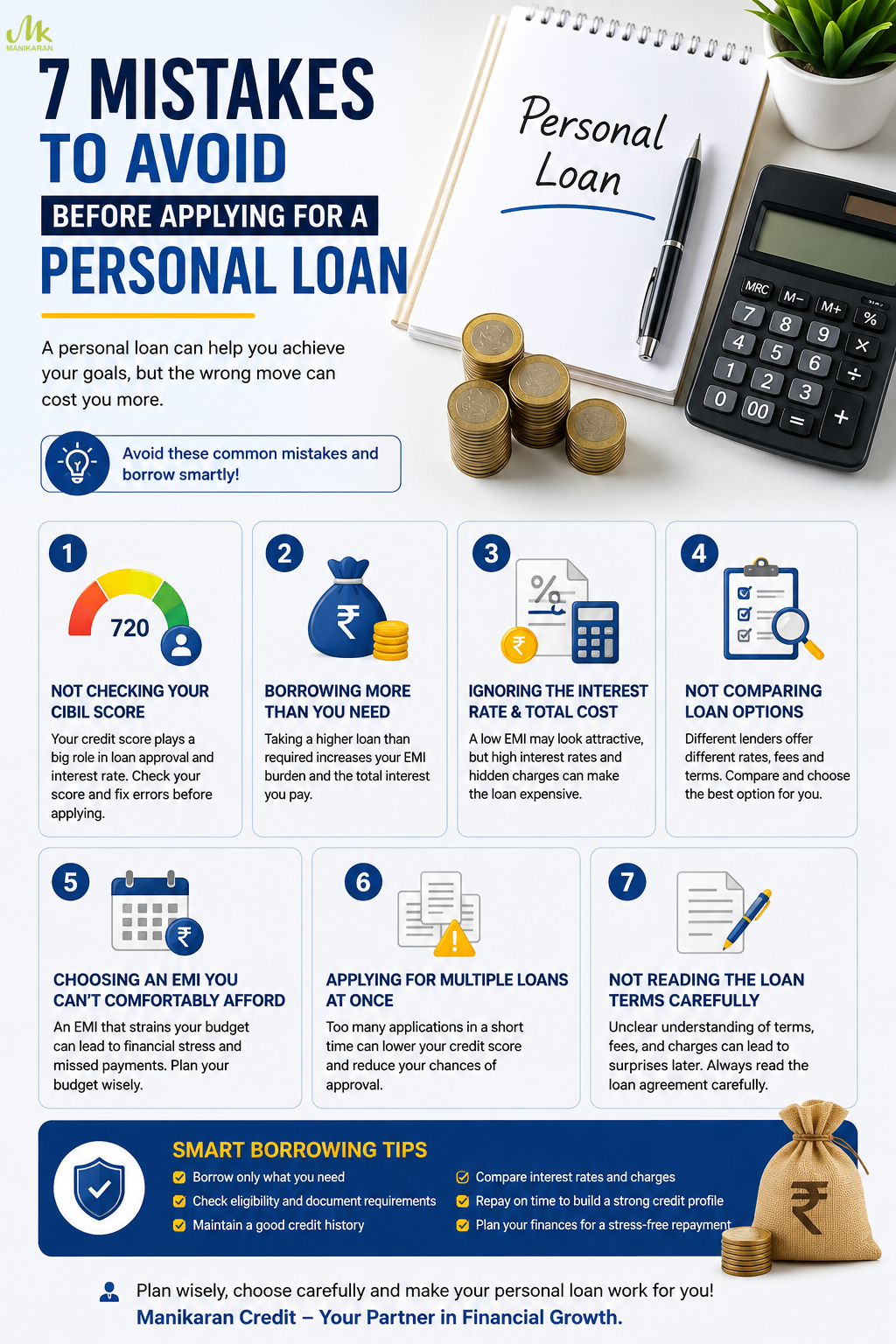
Applying for a personal loan can be a convenient way to manage planned expenses such as medical emergencies, education, home renovation, weddings, travel, debt consolidation, or other financial requirements. Since a personal loan is generally an unsecured loan, lenders may evaluate factors such as your income, credit history, CIBIL score, existing financial obligations, repayment capacity, and personal loan eligibility before approving the application.
However, borrowers sometimes make mistakes before or during the personal loan application process. These mistakes can affect loan approval, increase the overall cost of borrowing, or create financial pressure during repayment.
Before applying for a personal loan in India, it is important to understand the loan terms, check your financial situation, compare available options, and select a loan amount and tenure that you can comfortably repay.
Here are 7 common mistakes to avoid before applying for a personal loan.
1. Not Checking Your CIBIL Score Before Applying for a Personal Loan
Your CIBIL score is an important part of your credit profile and may be considered by lenders when evaluating your personal loan application. A healthy credit history can demonstrate responsible borrowing and timely repayment behaviour.
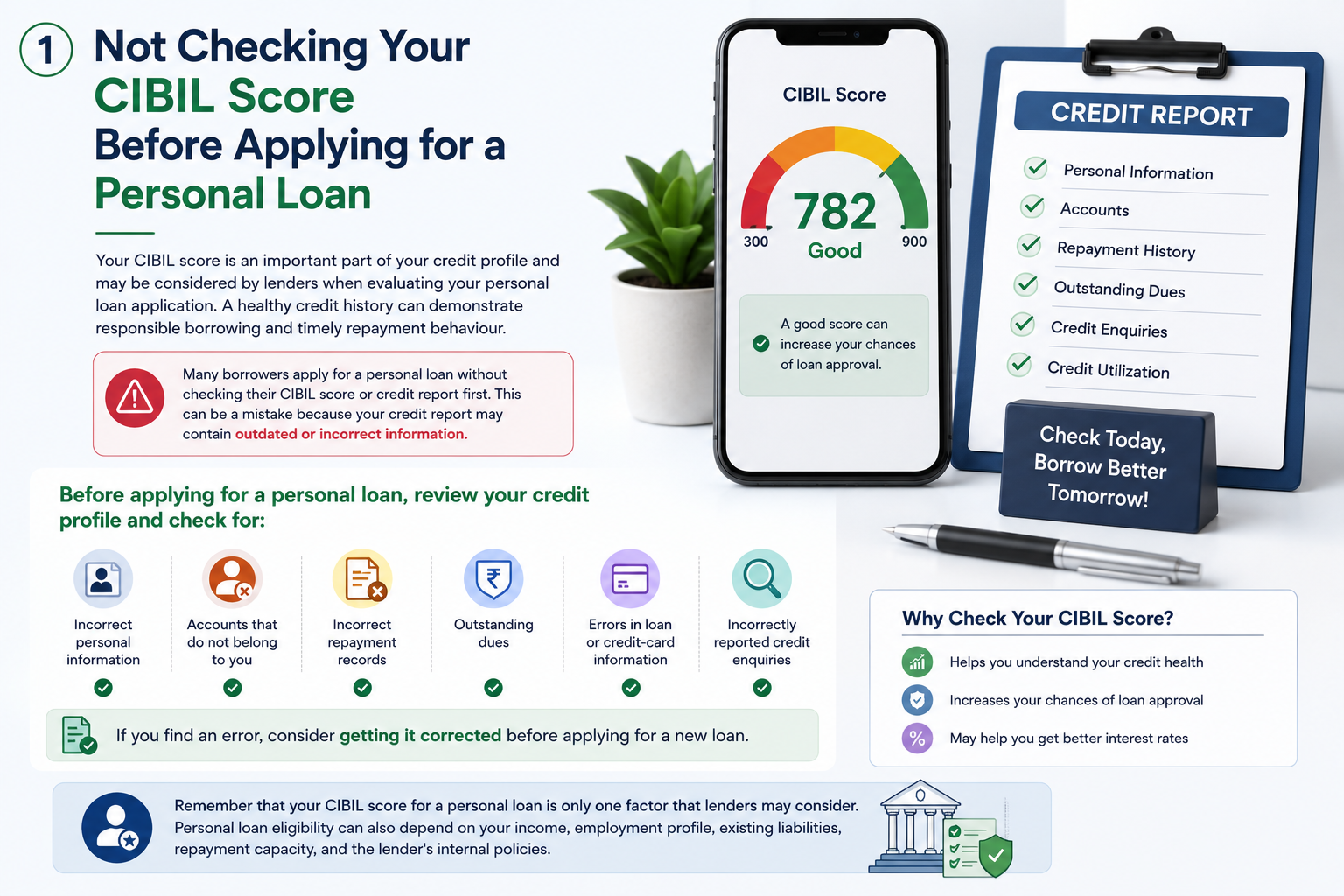
Many borrowers apply for a personal loan without checking their CIBIL score or credit report first. This can be a mistake beca
use your credit report may contain outdated or incorrect information.
Before applying for a personal loan, review your credit profile and check for:
- Incorrect personal information
- Accounts that do not belong to you
- Incorrect repayment records
- Outstanding dues
- Errors in loan or credit-card information
- Incorrectly reported credit enquiries
If you find an error, consider getting it corrected before applying for a new loan.
Remember that your CIBIL score for a personal loan is only one factor that lenders may consider. Personal loan eligibility can also depend on your income, employment profile, existing liabilities, repayment capacity, and the lender’s internal policies.
2. Borrowing More Money Than You Actually Need
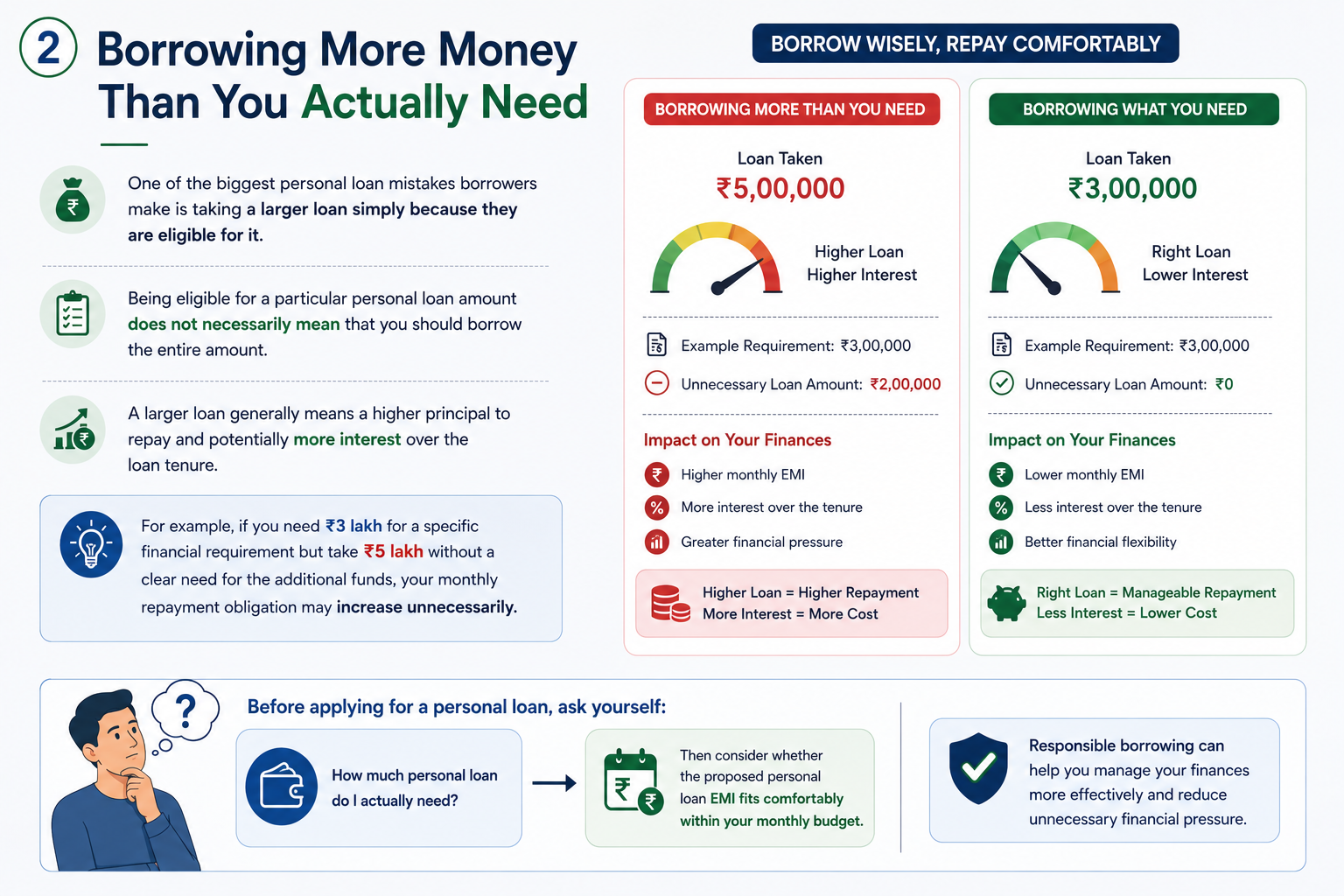
One of the biggest personal loan mistakes borrowers make is taking a larger loan simply because they are eligible for it.
Being eligible for a particular personal loan amount does not necessarily mean that you should borrow the entire amount.
A larger loan generally means a higher principal to repay and potentially more interest over the loan tenure.
For example, if you need ₹3 lakh for a specific financial requirement but take ₹5 lakh without a clear need for the additional funds, your monthly repayment obligation may increase unnecessarily.
Before applying for a personal loan, ask yourself:
How much personal loan do I actually need?
Then consider whether the proposed personal loan EMI fits comfortably within your monthly budget.
Responsible borrowing can help you manage your finances more effectively and reduce unnecessary financial pressure.
3. Focusing Only on the EMI and Ignoring the Total Cost
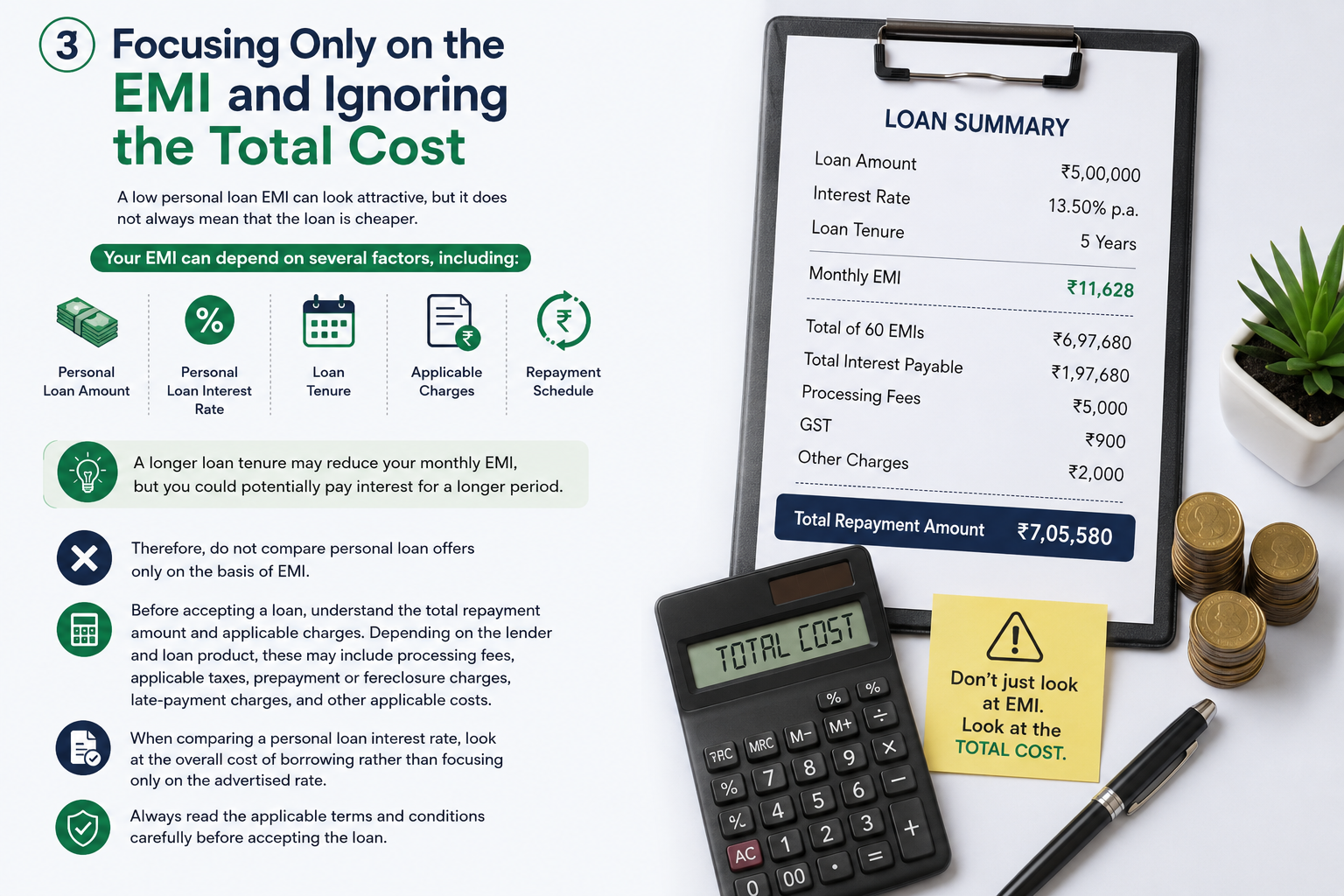
A low personal loan EMI can look attractive, but it does not always mean that the loan is cheaper.
Your EMI can depend on several factors, including:
- Personal loan amount
- Personal loan interest rate
- Loan tenure
- Applicable charges
- Repayment schedule
A longer loan tenure may reduce your monthly EMI, but you could potentially pay interest for a longer period.
Therefore, do not compare personal loan offers only on the basis of EMI.
Before accepting a loan, understand the total repayment amount and applicable charges. Depending on the lender and loan product, these may include processing fees, applicable taxes, prepayment or foreclosure charges, late-payment charges, and other applicable costs.
When comparing a personal loan interest rate, look at the overall cost of borrowing rather than focusing only on the advertised rate.
Always read the applicable terms and conditions carefully before accepting the loan.
4. Not Comparing Different Personal Loan Options
Another common mistake is accepting the first personal loan offer you receive without comparing it with other available options.
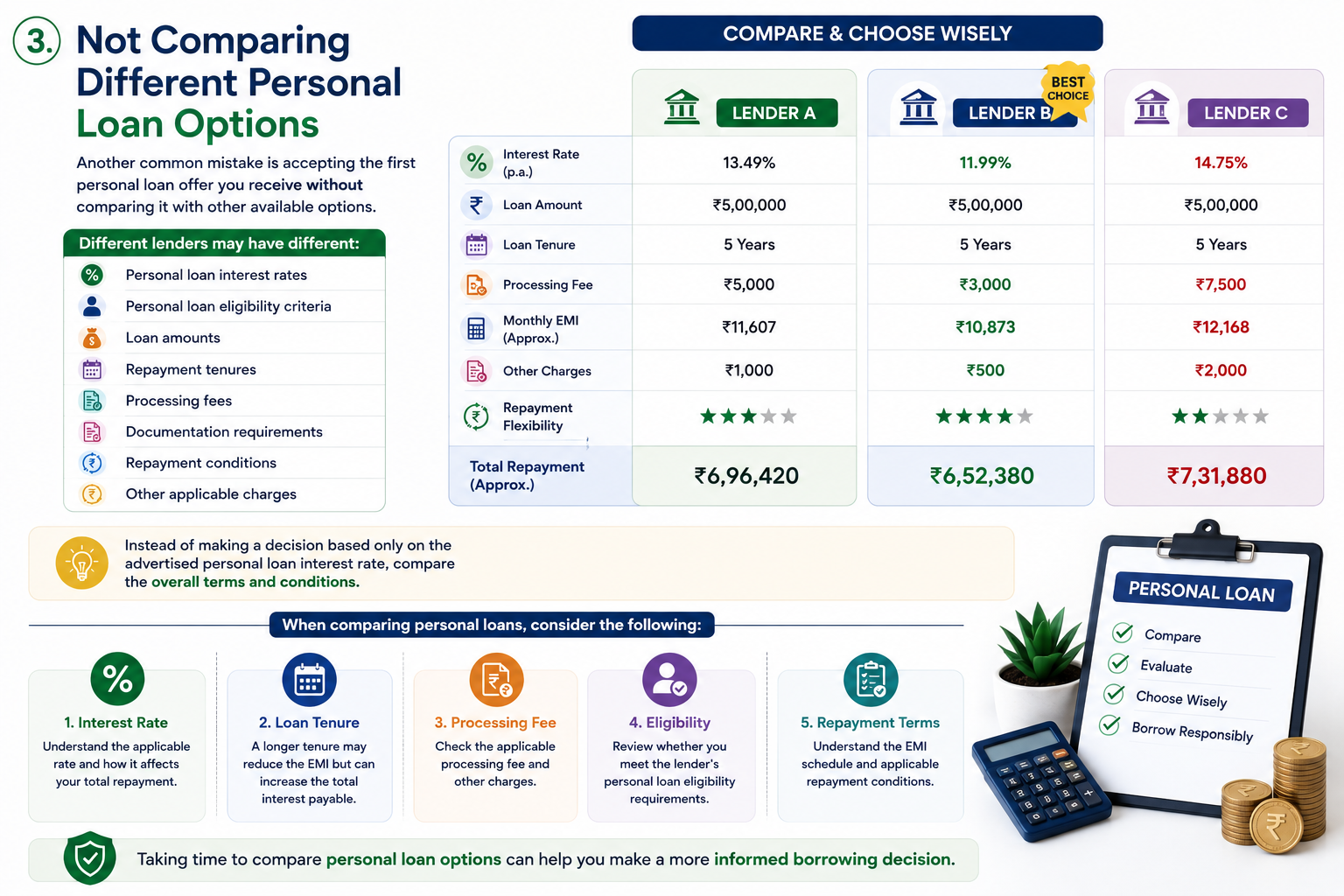
Different lenders may have different:
- Personal loan interest rates
- Personal loan eligibility criteria
- Loan amounts
- Repayment tenures
- Processing fees
- Documentation requirements
- Repayment conditions
- Other applicable charges
Instead of making a decision based only on the advertised personal loan interest rate, compare the overall terms and conditions.
When comparing personal loans, consider the following:
Interest Rate: Understand the applicable rate and how it affects your total repayment.
Loan Tenure: A longer tenure may reduce the EMI but can increase the total interest payable.
Processing Fee: Check the applicable processing fee and other charges.
Eligibility: Review whether you meet the lender’s personal loan eligibility requirements.
Repayment Terms: Understand the EMI schedule and applicable repayment conditions.
Taking time to compare personal loan options can help you make a more informed borrowing decision.
5. Choosing a Personal Loan EMI That Puts Pressure on Your Monthly Budget
A personal loan EMI becomes a regular financial commitment.
Before selecting your loan amount and repayment tenure, review your monthly income and expenses.
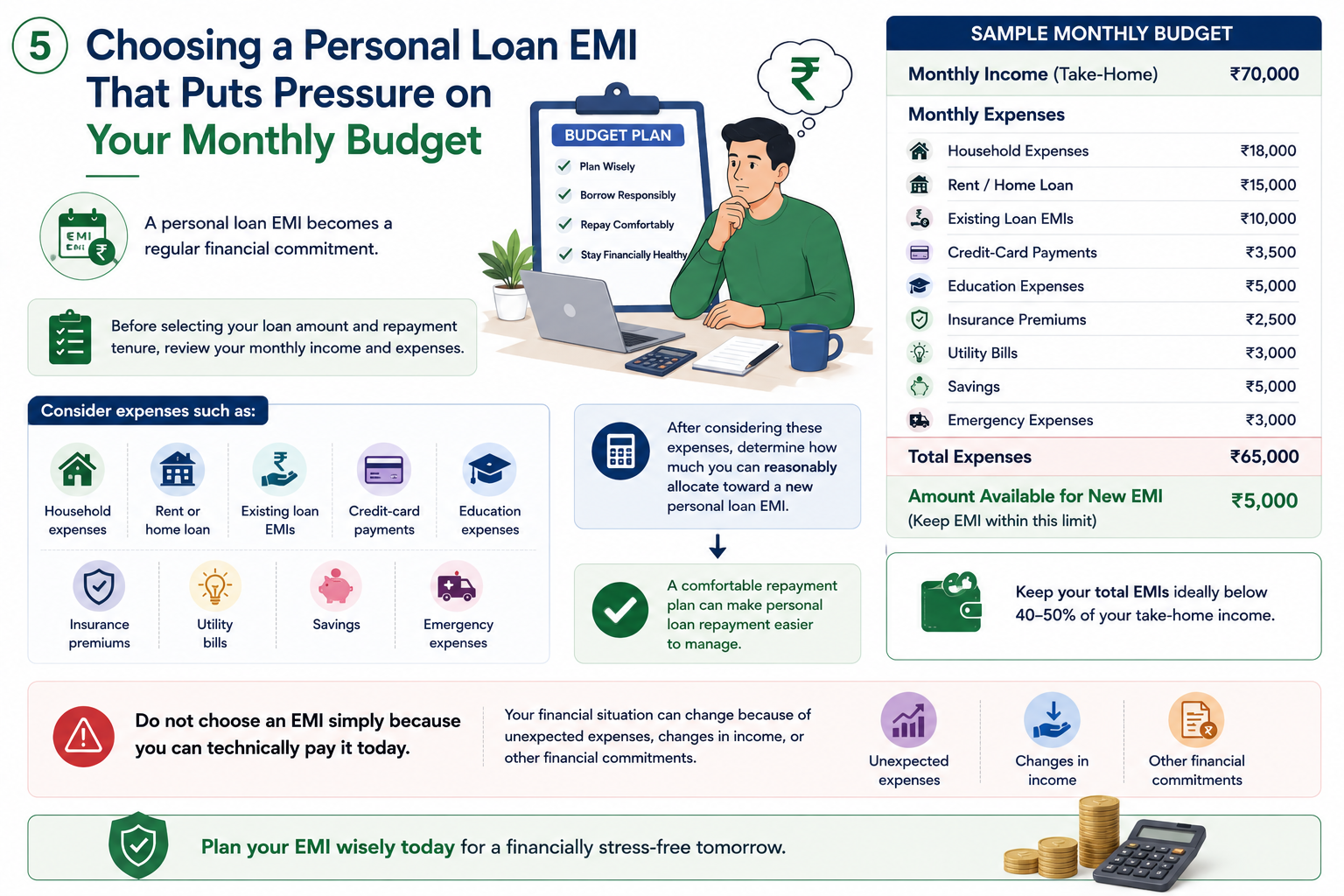
Consider expenses such as:
- Household expenses
- Rent or home loan
- Existing loan EMIs
- Credit-card payments
- Education expenses
- Insurance premiums
- Utility bills
- Savings
- Emergency expenses
After considering these expenses, determine how much you can reasonably allocate toward a new personal loan EMI.
Do not choose an EMI simply because you can technically pay it today. Your financial situation can change because of unexpected expenses, changes in income, or other financial commitments.
A comfortable repayment plan can make personal loan repayment easier to manage.
6. Applying for Multiple Personal Loans Without Understanding the Impact
When people need money urgently, they may apply for multiple personal loans at the same time, hoping that at least one application will be approved.
However, multiple credit applications within a short period may result in multiple credit enquiries, depending on the lender and application process.
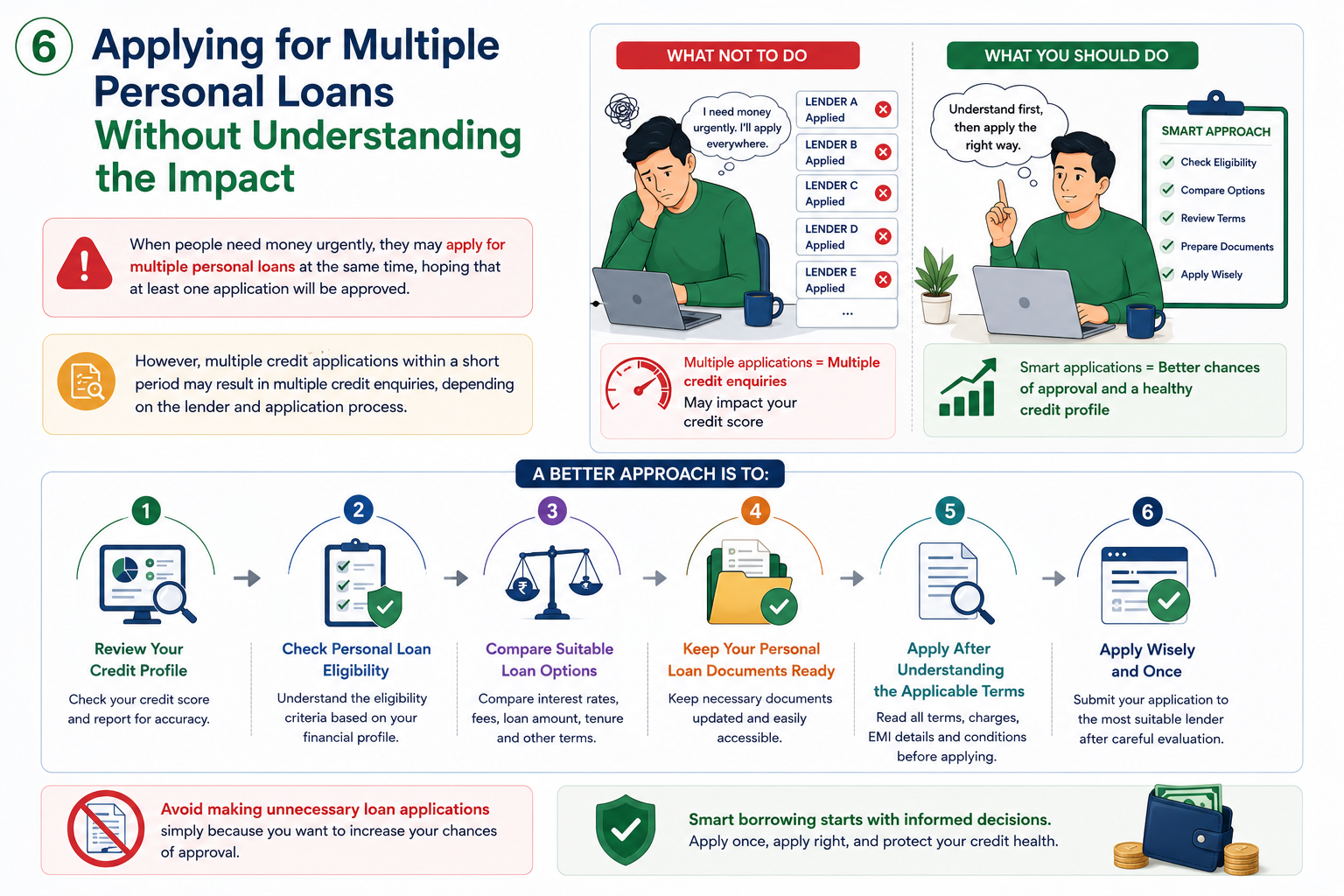
Instead of applying everywhere, first understand the personal loan eligibility criteria and identify suitable options based on your financial profile.
A better approach is to:
- Review your credit profile.
- Check personal loan eligibility.
- Compare suitable loan options.
- Keep your personal loan documents ready.
- Apply after understanding the applicable terms.
Avoid making unnecessary loan applications simply because you want to increase your chances of approval.
7. Not Reading the Personal Loan Agreement Carefully
One of the most important steps before accepting a personal loan is understanding the applicable loan terms.
Some borrowers focus only on the approved loan amount and EMI and do not carefully review the agreement.
Before accepting a personal loan, make sure you understand:
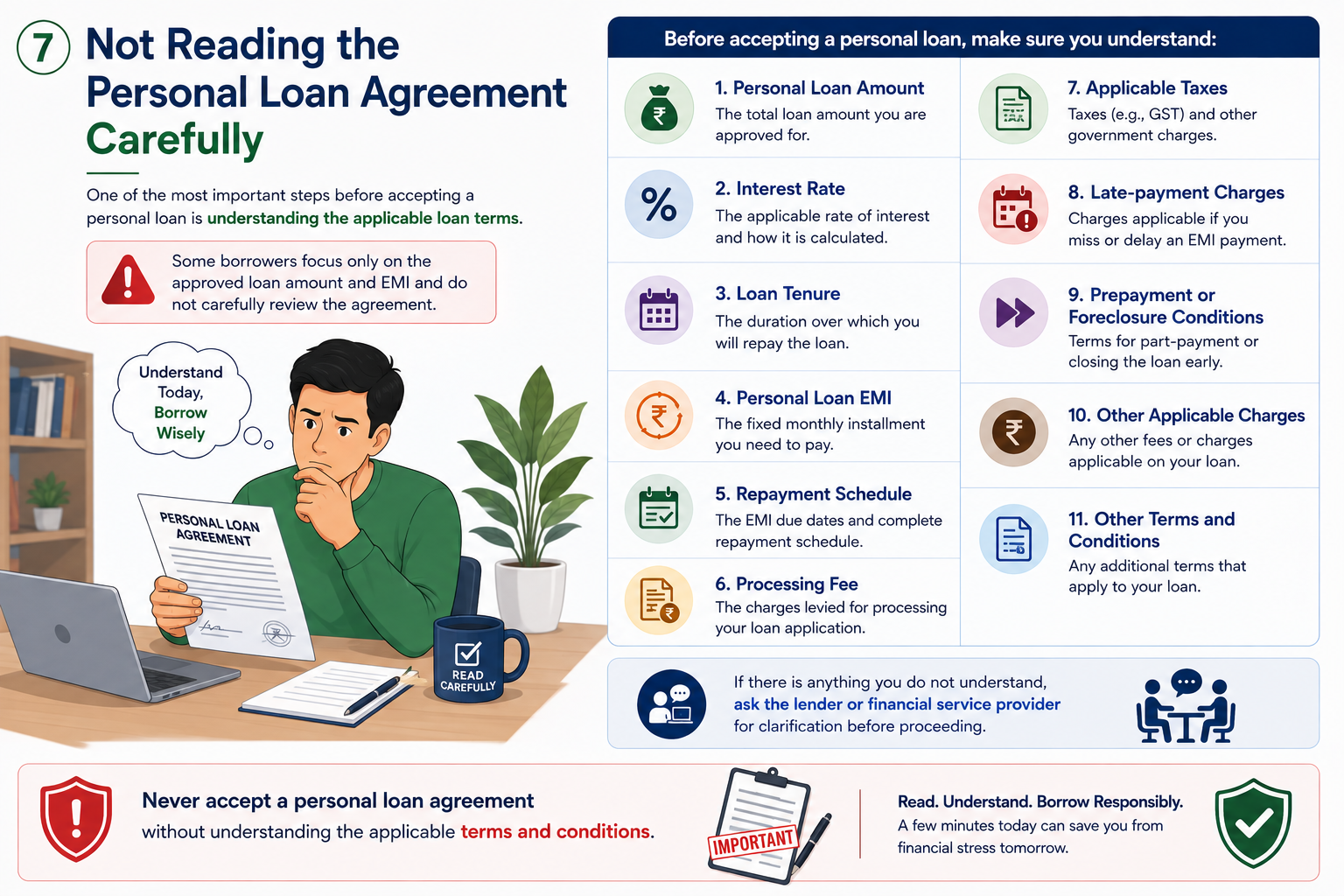
- Personal loan amount
- Interest rate
- Loan tenure
- Personal loan EMI
- Repayment schedule
- Processing fee
- Applicable taxes
- Late-payment charges
- Prepayment or foreclosure conditions
- Other applicable charges
- Other terms and conditions
If there is anything you do not understand, ask the lender or financial service provider for clarification before proceeding.
Never accept a personal loan agreement without understanding the applicable terms and conditions.
Bonus Tips Before Applying for a Personal Loan
Apart from avoiding these seven mistakes, a few simple steps can make your personal loan application process more organised.
Keep Your Personal Loan Documents Ready
Depending on the lender and applicant profile, documents may include identity proof, address proof, income-related documents, bank statements, employment details, or other documents.
Keeping the required personal loan documents ready can help make the application process smoother.
The exact documentation requirements can vary depending on the lender, applicant profile, employment type, income, and other eligibility factors.
Review Your Existing Financial Commitments
If you already have multiple EMIs or outstanding credit-card balances, consider how another personal loan could affect your monthly cash flow.
Your existing financial obligations may be considered when a lender evaluates your repayment capacity and personal loan eligibility.
Understand Why You Are Borrowing
Before applying for a personal loan, clearly identify the purpose and amount you require.
Whether you need funds for a medical emergency, education, home renovation, wedding expenses, debt consolidation, or another financial requirement, knowing the exact amount can help prevent unnecessary borrowing.
Maintain a Healthy Repayment History
Timely repayment of existing credit obligations can help demonstrate responsible credit behaviour.
Avoid missing EMI payments or delaying credit-card payments whenever possible.
A responsible repayment history can support your overall credit profile.
Don’t Let Urgency Lead to a Poor Decision
Financial emergencies can create pressure to accept the first available loan offer.
Even when funds are needed quickly, take time to understand the personal loan interest rate, EMI, tenure, processing fee, eligibility criteria, and other applicable charges before making a decision.
Frequently Asked Questions About Personal Loans
What should I check before applying for a personal loan?
Before applying for a personal loan, check your CIBIL score and credit profile, income, existing financial commitments, required loan amount, expected EMI, interest rate, applicable fees, repayment tenure, personal loan eligibility, and other loan terms.
What CIBIL score is required for a personal loan?
There is no single CIBIL score that guarantees personal loan approval. Lenders may use their own eligibility criteria and consider multiple factors, including credit history, income, existing obligations, employment profile, and repayment capacity.
Is a higher personal loan amount always better?
No. You should generally borrow according to your actual financial requirement and repayment capacity rather than simply taking the maximum amount you may qualify for.
A higher loan amount can result in higher repayment obligations and potentially more interest over the loan tenure.
Should I compare personal loans before applying?
Yes. Comparing available personal loan options can help you understand differences in interest rates, processing fees, repayment tenure, eligibility requirements, and other applicable terms.
Can my existing EMIs affect my personal loan eligibility?
Existing financial commitments may be considered when a lender evaluates your repayment capacity. The exact personal loan eligibility criteria can vary between lenders.
Is personal loan EMI the only thing I should compare?
No. Personal loan EMI is only one factor. You should also consider the interest rate, total repayment amount, processing fees, tenure, repayment conditions, and other applicable charges.
What documents are required for a personal loan?
Documentation varies depending on the lender and applicant profile. Commonly requested personal loan documents may include identity proof, address proof, income documents, bank statements, and employment-related information.
How can I avoid mistakes when applying for a personal loan?
Start by checking your credit profile, understanding your personal loan eligibility, borrowing only what you need, comparing available loan options, calculating a comfortable EMI, preparing the required documents, and carefully reading the loan agreement before accepting the loan.
Final Thoughts
A personal loan can provide useful financial support when managed responsibly. However, the decision to borrow should be based on your actual financial requirement, repayment capacity, and understanding of the applicable loan terms.
Before applying for a personal loan, remember these seven important points:
- Check your CIBIL score and credit profile.
- Borrow only what you need.
- Understand the personal loan interest rate and total cost.
- Compare suitable personal loan options.
- Choose a personal loan EMI that fits your budget.
- Avoid unnecessary multiple loan applications.
- Read and understand the personal loan agreement carefully.
Taking a few extra steps before applying can help you make a more informed financial decision and avoid unnecessary financial pressure.
Looking for personal loan options?
Manikaran Credit can help you understand available financing options based on your financial requirements and eligibility. Before proceeding, review the applicable terms, conditions, fees, and eligibility criteria carefully.