

Can I Take a Personal Loan to Pay Off Credit Card Debt?
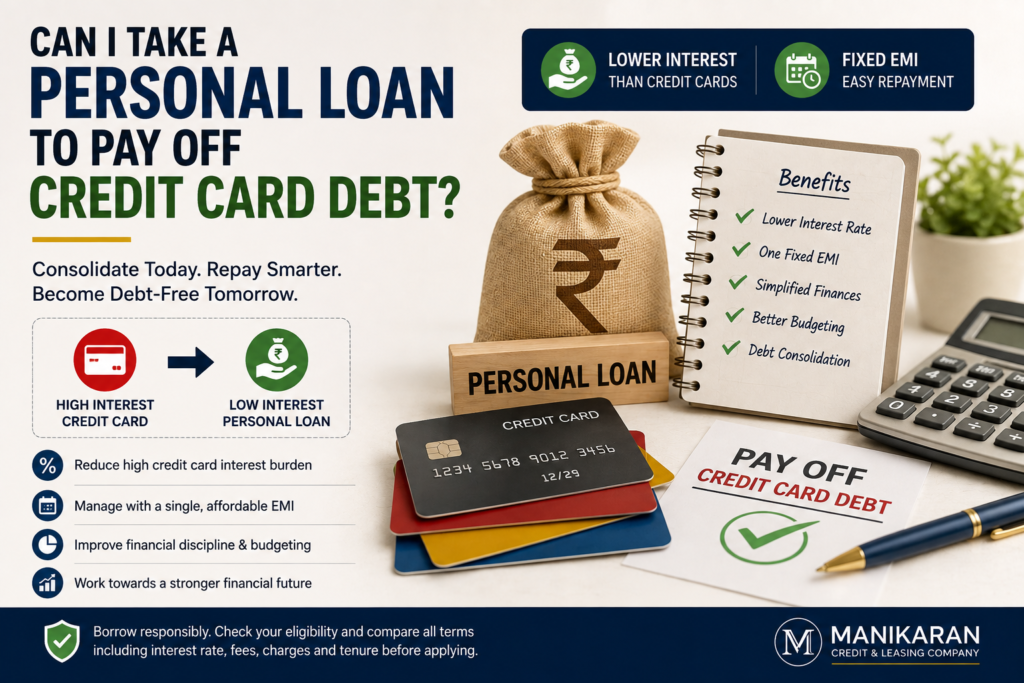
Credit cards can be a convenient way to manage everyday expenses, but carrying a large outstanding balance can become expensive over time. If you are struggling to manage high-interest credit card dues, you may wonder, “Can I take a personal loan to pay off my credit card debt?” The answer is yes, in many cases, a personal loan can be used to clear existing credit card balances. However, whether it is the right financial decision depends on factors such as the personal loan interest rate, processing fees, repayment tenure, your existing credit card debt and your ability to manage the new EMI.
How Does It Work?
Using a personal loan to pay off credit card debt is often considered a form of debt consolidation. Instead of managing one or more revolving credit card balances, you take a personal loan and use the funds to repay your outstanding credit card dues. You then repay the personal loan through fixed monthly EMIs over a predetermined tenure. This can make your monthly finances easier to organize because you have a structured repayment schedule rather than continuously carrying a credit card balance.
Why Consider a Personal Loan for Credit Card Debt?
One potential advantage is predictable repayment. Credit card balances can continue to accumulate interest when they are not paid in full, while a personal loan generally comes with a defined tenure and fixed repayment schedule. Depending on the loan terms available to you, consolidating your debt may also reduce the overall borrowing cost. A single EMI can make budgeting easier and may help you create a clear plan for becoming debt-free.
However, borrowers should compare the complete cost rather than looking only at the advertised interest rate. Processing fees, applicable taxes, other charges and the total loan tenure can affect the actual cost of borrowing.
When Can It Be a Smart Option?
A personal loan may be worth considering when you have multiple credit card balances, are finding it difficult to manage different payment dates, or have access to a personal loan whose overall cost is suitable for your financial situation. It can also be useful when a fixed repayment schedule helps you create a disciplined plan to clear your debt. Before applying, calculate the proposed EMI and make sure it comfortably fits within your monthly budget.
What Are the Risks?
Taking a personal loan does not make the debt disappear—it changes the way you repay it. You still have a financial obligation and must make your loan EMIs on time. There may also be processing fees or other applicable charges. Choosing a very long tenure could reduce your monthly EMI but increase the total interest paid over the life of the loan. Most importantly, if you pay off your credit cards with a personal loan but continue spending heavily on those cards, you could end up with both a personal loan and new credit card debt.
Personal Loan vs Credit Card Debt
The right choice depends on your individual circumstances. Credit card debt can become difficult to manage when balances remain unpaid, while a personal loan can provide a structured EMI and defined repayment period. However, borrowers should compare the interest rate, fees, tenure, EMI and total repayment amount before deciding. The goal should not simply be to move debt from one account to another, but to create a realistic plan to reduce and eventually eliminate the debt.
Can It Affect Your CIBIL Score?
Using a personal loan to repay credit card debt can affect your credit profile in different ways. Making personal loan EMIs on time can demonstrate responsible repayment behaviour. Paying down credit card balances can also reduce your credit utilisation, which may be beneficial for your credit profile. On the other hand, multiple loan applications or missed EMI payments can negatively affect your credit history. Therefore, apply only after assessing your eligibility and repayment capacity.
What Should You Check Before Taking the Loan?
Before taking a personal loan to pay off credit card debt, calculate your total outstanding credit card balance and compare it with the amount you plan to borrow. Check the personal loan interest rate, processing fee, applicable taxes, EMI, tenure, total repayment amount and any prepayment or foreclosure conditions. Most importantly, prepare a monthly budget to ensure that you can comfortably make every EMI payment.
How to Use Debt Consolidation Responsibly
If you decide to use a personal loan to clear credit card debt, consider treating it as a financial reset rather than an opportunity to increase your spending. After clearing your credit card balances, avoid unnecessary purchases and try not to accumulate new high-cost debt. Creating an emergency fund and following a realistic monthly budget can also help reduce the chances of falling back into the same debt cycle.
How Manikaran Credit Can Help
If you are considering a personal loan to manage your credit card debt, Manikaran Credit can help eligible borrowers explore personal loan options based on their financial profile. Before making a decision, borrowers should carefully review the applicable interest rate, processing fees, repayment tenure, EMI and other terms and conditions. The right loan should fit your repayment capacity and overall financial goals.
Conclusion
So, can you take a personal loan to pay off credit card debt? Yes, it can be an option for eligible borrowers, particularly when it provides a manageable repayment structure and the overall cost is suitable. But it should be approached carefully. Compare the complete cost of both options, calculate your EMI, understand the loan terms and make sure you have a plan to avoid building new credit card debt. Responsible borrowing is not just about getting a loan—it is about choosing a repayment strategy that supports your long-term financial stability.