

How Existing Credit Card Dues Affect Personal Loan Eligibility
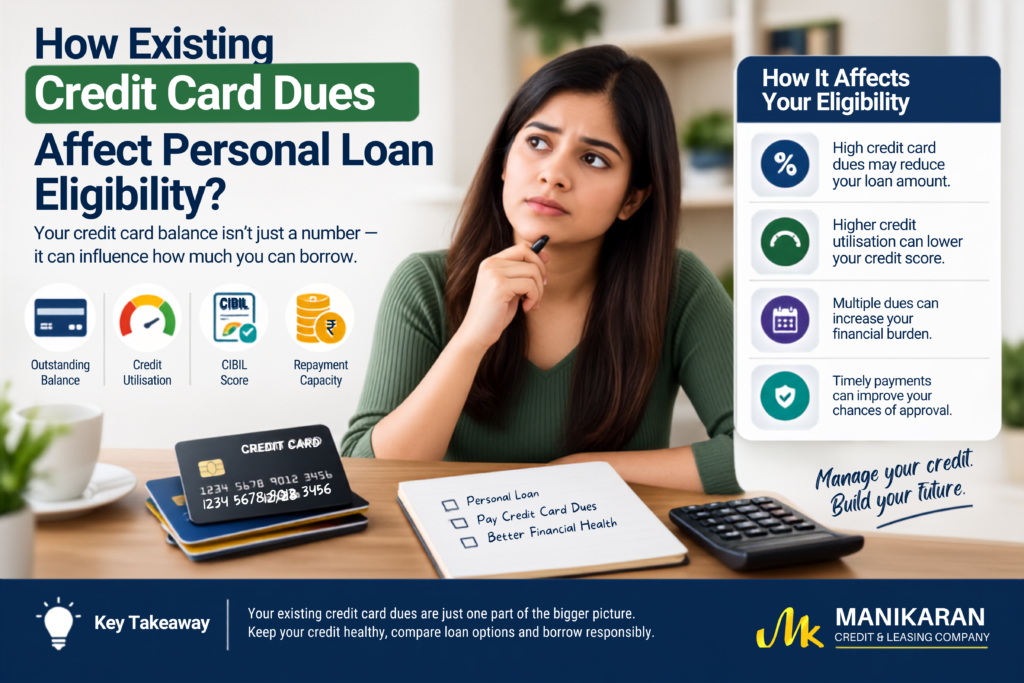
When you apply for a personal loan, lenders generally look at more than just your monthly income. Your existing financial commitments, repayment history, credit profile and ability to manage another EMI can all influence your eligibility. One important factor is your existing credit card dues. If you are already carrying a significant credit card balance, it may affect how a lender evaluates your personal loan application. Understanding this relationship can help you make better borrowing decisions and avoid taking on more debt than you can comfortably repay.
What Are Existing Credit Card Dues?
Existing credit card dues are the amount you currently owe on your credit card, including any outstanding balance and applicable charges. If you regularly pay your entire credit card bill by the due date, your outstanding balance may be relatively low. However, if you carry a balance from month to month or use a large portion of your available credit limit, lenders may consider your existing credit obligations when assessing a new loan application.
How Do Credit Card Dues Affect Personal Loan Eligibility?
When evaluating a personal loan application, lenders want to determine whether you have enough income to comfortably handle the proposed loan EMI along with your existing financial obligations. Your credit card dues may therefore form part of the overall picture of your repayment capacity. If you already have substantial monthly obligations, taking another loan could increase your financial burden. As a result, the lender may offer a lower loan amount, ask for additional information, or assess the application more cautiously depending on its lending policies and your overall profile.
Credit Utilisation Can Also Matter
Your credit card balance is not the only consideration. Credit utilisation ratio can also be important to your credit profile. It represents how much of your available credit limit you are currently using. For example, if your credit card limit is ₹1,00,000 and your outstanding balance is ₹70,000, your utilisation is 70%. A consistently high utilisation ratio can indicate that you are relying heavily on available credit and may affect how your credit profile is viewed. Maintaining responsible credit usage and paying your dues on time can help demonstrate better financial management.
Does Paying Only the Minimum Amount Affect Loan Eligibility?
Paying the minimum amount due may keep the credit card account from becoming overdue, but it does not mean the outstanding balance has been cleared. If you repeatedly make only minimum payments, your credit card balance can remain high for a longer period and interest or other applicable charges may continue according to the card’s terms. A consistently high outstanding balance can increase your overall financial obligations and may affect your ability to qualify for additional borrowing.
What About Your CIBIL Score?
Your credit history is another important part of a personal loan application. Credit card repayment behaviour, outstanding balances, credit utilisation and recent credit enquiries can all contribute to your overall credit profile. Regularly missing credit card payments can negatively affect your credit history, while responsible and timely repayment can support a healthier credit profile. Before applying for a personal loan, it can be useful to review your credit report and make sure the information reported about your existing accounts is accurate.
Can Existing Credit Card Debt Lead to a Lower Loan Amount?
Yes, depending on the lender’s assessment. If your existing credit card obligations and other EMIs already consume a significant portion of your monthly income, there may be less room in your budget for another EMI. In such a situation, the lender may determine that a smaller loan amount is more appropriate for your repayment capacity. This is why simply having a good salary does not always guarantee approval for the loan amount you request.
Should You Clear Credit Card Dues Before Applying for a Personal Loan?
There is no single answer that applies to every borrower. If you have sufficient funds to reduce your credit card balance without creating another financial problem, lowering your outstanding dues may improve your overall financial position. However, taking another loan solely to clear credit card debt should be considered carefully. Compare the complete cost of borrowing, including interest, processing fees, applicable charges and repayment tenure, before making a decision.
How to Improve Your Chances of Personal Loan Approval
If you are planning to apply for a personal loan while carrying credit card dues, focus on maintaining a healthy repayment record. Pay your credit card bills and existing EMIs on time, avoid unnecessarily using a large portion of your available credit limit, and avoid making multiple loan applications within a short period. You should also review your monthly income and expenses to determine how much additional EMI you can realistically afford. Providing accurate income and financial information can also help the lender assess your application appropriately.
What Should You Check Before Applying?
Before submitting a personal loan application, calculate your total outstanding credit card dues and existing EMIs. Check your credit report for accuracy and understand your current credit utilisation. Then estimate the EMI of the new personal loan and consider whether it comfortably fits into your monthly budget. Do not select a loan amount simply because you are eligible for it. Borrow only what you need and what you can reasonably repay.
Example of How Credit Card Dues Can Influence Borrowing
Consider a borrower with a monthly income of ₹50,000 who already has credit card dues and other monthly financial commitments. If the borrower applies for an additional personal loan, the lender will generally consider the existing obligations along with the proposed EMI when assessing repayment capacity. If the combined obligations are already high, the borrower may not qualify for the desired loan amount. On the other hand, a borrower with manageable existing commitments and a strong repayment history may have a stronger overall application profile. Actual eligibility varies according to the lender’s policies and the borrower’s individual circumstances.
Can Paying Off Credit Card Dues Improve Your Financial Profile?
Reducing outstanding credit card debt can lower the amount of credit you are currently using and may make your monthly budget easier to manage. However, borrowers should not expect an immediate or guaranteed increase in their credit score simply because they paid off a balance. Credit profiles are influenced by multiple factors, including repayment history, utilisation, account history and credit enquiries. The most important approach is to maintain responsible credit behaviour consistently over time.
How Manikaran Credit Can Help
If you are considering a personal loan while managing existing credit card dues, Manikaran Credit can help eligible borrowers explore personal loan options based on their financial profile. Before applying, borrowers should review their income, existing obligations, credit profile and repayment capacity. It is also important to understand the applicable interest rate, processing fees, tenure, EMI and other terms before accepting any loan offer.
Conclusion
Existing credit card dues can play an important role in how your personal loan application is assessed because they are part of your overall financial obligations. High outstanding balances, heavy credit utilisation, missed payments and multiple recent credit enquiries may make your financial profile less favourable, while responsible repayment and manageable debt can support a healthier borrowing profile. Before applying for a personal loan, review your credit card dues, calculate your existing commitments and make sure the new EMI fits comfortably within your budget. The goal should not be to borrow the maximum amount available, but to choose a loan that you can repay responsibly.
Frequently Asked Questions
Do credit card dues affect personal loan eligibility?
Yes. Existing credit card obligations can be considered when a lender evaluates your overall repayment capacity, alongside income, credit history and other financial commitments.