

How to Improve Your CIBIL Score in 90 Days
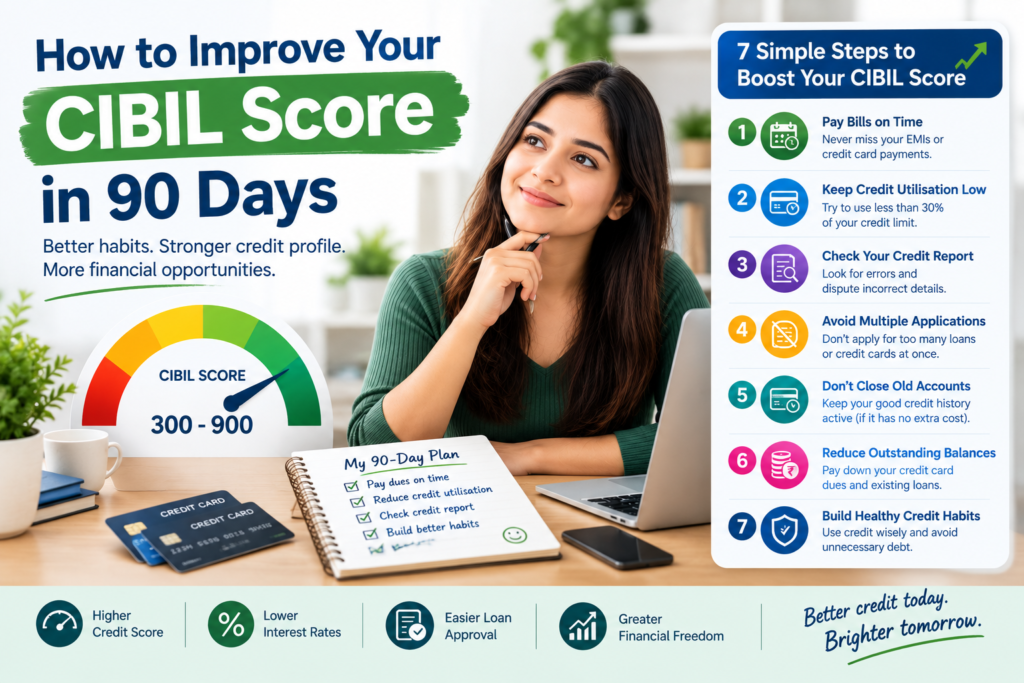
Your CIBIL Score is an important part of your credit profile. It is a three-digit score ranging from 300 to 900 and is based on information in your credit history, including your payment behaviour, credit utilisation, credit accounts and enquiries. Lenders may consider your CIBIL Score along with your income, existing obligations and other information when evaluating a loan application. A healthier credit profile can therefore make it easier to access credit when you need it.
If your CIBIL Score is lower than you would like, there is no instant shortcut that can guarantee a particular score within 90 days. However, the next three months can be used to build better credit habits, reduce unnecessary debt and identify errors in your credit report. CIBIL itself recommends paying dues on time, keeping balances low, applying for new credit cautiously and regularly reviewing your credit report.
Start With Your CIBIL Report
The most important habit you can build is paying your existing EMIs and credit card bills on time. Late payments, missed payments and delinquencies can negatively affect your CIBIL Score. Set up reminders or automatic payment arrangements where appropriate so that you do not accidentally miss a due date. If you already have overdue payments, focus first on bringing your accounts up to date and then maintain consistent repayment behaviour.
Reduce Your Credit Card Balances
The amount of available credit you are using is another important factor in your credit profile. CIBIL advises consumers to keep their credit utilisation under control because high utilisation can indicate that you are heavily dependent on available credit. During the first 30 to 60 days, try to reduce unnecessary credit card spending and bring down outstanding balances where your finances allow. Avoid taking on additional debt simply to make payments on existing debt.
Avoid Multiple Loan Applications
If you are trying to improve your credit profile, repeatedly applying for loans or credit cards in a short period may work against you. When you apply for new credit, lenders may make enquiries on your credit report, and frequent enquiries can negatively affect your score or make lenders view your credit-seeking behaviour more cautiously. Instead of submitting applications to multiple lenders at the same time, compare your options first and apply only when you genuinely need credit.
Don't Close Old Credit Accounts Without Thinking
The length of your credit history can also contribute to your credit profile. If an older credit account has a positive repayment history and no unnecessary cost, closing it simply to reduce the number of accounts may not always be the best decision. Before closing an old credit card or loan account, consider how it fits into your overall financial situation and credit history.
Check for Errors in Your Credit Report
Sometimes the information in a credit report may not accurately reflect your current financial situation. For example, you may find an account that you never opened, an incorrect outstanding balance or a payment that has not been correctly reported. If you identify an error, you can contact the relevant credit institution and use CIBIL’s dispute process where appropriate. CIBIL explains that the underlying information is supplied by credit institutions, so corrections generally require confirmation from the relevant institution.
Be Careful With Co-Signed and Joint Accounts
If you have co-signed, guaranteed or jointly held credit accounts, keep an eye on their repayment status as well. CIBIL notes that missed payments on such accounts can affect the credit profile of the associated individuals. Regularly checking these accounts can help you identify problems before they become bigger issues.
Don't Believe Anyone Promising an Instant CIBIL Fix
Be cautious if someone claims they can immediately increase your CIBIL Score for a fee. There is no legitimate shortcut that can erase accurate negative information simply because someone promises to “fix” your score. CIBIL states that consumers do not need to pay a fee to improve their CIBIL Score, correct discrepancies or update credit information. Genuine improvement comes from responsible credit behaviour and accurate reporting over time.
Your 90-Day CIBIL Improvement Plan
During the first 30 days, review your CIBIL Report, identify outstanding dues, check for errors and make sure all upcoming EMIs and credit card payments are paid on time. During days 31 to 60, focus on reducing unnecessary credit card balances, avoiding new debt where possible and maintaining consistent repayment behaviour. During days 61 to 90, continue the same habits, monitor your credit report and avoid unnecessary loan or credit card applications.
Remember that the 90-day period should be viewed as a credit-health improvement plan, not a guaranteed score-increase period. Your actual CIBIL Score may change differently depending on your existing credit history, reported information and lender reporting cycles.
How Long Does It Take for Changes to Appear?
Changes to your credit profile may not appear immediately after you make a payment or close an account. CIBIL states that credit institutions generally submit data every 30–45 days, so there can be a reporting gap between a financial action and its appearance on your CIBIL Report.
For this reason, don’t panic if your report does not change immediately after paying down a balance. Give the relevant lender time to report the updated information and then check your report again.
Does Checking Your Own CIBIL Score Reduce It?
No. Checking your own CIBIL Score is considered a self-check and does not negatively affect your score. CIBIL recommends monitoring your credit profile regularly, and its current guidance says consumers should check their score and report at least once a month to stay informed about their credit health.
Can a Better CIBIL Score Guarantee Personal Loan Approval?
No. A good CIBIL Score can strengthen your credit profile, but it does not guarantee that a personal loan will be approved. Lenders may also consider factors such as income, employment, existing EMIs, credit card obligations, repayment capacity and their own eligibility criteria. CIBIL itself does not approve or reject loans; the lending decision is made by the lender.
How Manikaran Credit Can Help
If you are planning to apply for a personal loan, maintaining a healthy credit profile can be an important part of preparing your application. Manikaran Credit can help eligible borrowers explore personal loan options based on their financial profile. Before applying, review your CIBIL Report, understand your existing obligations and make sure the proposed EMI fits comfortably within your repayment capacity.
A stronger credit profile is built through consistent financial habits—not overnight. Whether your goal is to apply for a personal loan, manage existing debt or simply become more financially prepared, responsible credit behaviour can help you stay credit-ready.
Conclusion
Improving your CIBIL Score in 90 days is not about finding a quick fix. It is about taking consistent steps that support healthier credit behaviour. Pay your EMIs and credit card bills on time, keep credit utilisation under control, avoid unnecessary applications, monitor your credit report and correct genuine errors. These habits may help strengthen your credit profile over time, although the exact change in your score will depend on your individual credit history and how lenders report information.
Start with one simple step today: check your credit report, understand where you stand and build better credit habits from there.